- Pick what you need and give your kitchen's ZIP code.
- Each service goes to the number of local companies you choose, from one to five. We check licenses where the law requires one and email you their names.
- You talk with them and decide. You hire and pay the company directly.
U.S. Bureau of Labor Statistics, private restaurants and other eating places
Facts checked 2026-11-15.
In Monroe County the health permit comes from the county's Food Protection office on Westfall Road in Rochester. Building, fire and exhaust work come from the town, village or city where the kitchen sits, and grease limits come from the county's Pure Waters sewer law.
1. 1,320 eating places in Monroe County
The Bureau of Labor Statistics counted 1,320 private restaurant and eating-place establishments in Monroe County in 2025. That is up from 1,285 in 2019, a 2.7 percent increase. The industry employed 23,006 people in the county in 2025.
2. Food Protection sits in Room 832 on Westfall Road
The Department of Public Health's Food Protection office is at 111 Westfall Road, Room 832, Rochester, NY 14620, phone (585) 753-5064. It is open weekday mornings from 9 a.m. to noon, with other times by appointment. It issues permits, enforces Subparts 14-1, 14-2, 14-4 and 14-5 of the State Sanitary Code, reviews plans for new and expanded places and uses HACCP principles for high-risk kitchens.
Inspection results are posted on Health Data NY. Fees are paid through an online payment page, but only after the office has created an invoice. The county page lists no fee amounts and no review timeline, so ask the office for both.
A local company can take it from here. One form, free for restaurants.
Get a quote3. The plan approval form costs $75
Before construction or a major renovation, the applicant sends the completed form, professional blueprints or a floor plan drawing and a $75.00 plan review fee. An inspector, the Food Protection supervisor and the Bureau of Engineering all sign off on the form.
It asks how many seats the dining room and bar have, how many public and employee bathrooms there are, and whether the grease trap sits indoors or outdoors. It also asks whether exhaust ventilation is present. The county's general requirements sheet, updated in March 2026, adds a workers' compensation and disability proof, food worker certification and an opening inspection. A stainless three-bay sink, a prep sink with an indirect drain, a hand sink and a mop sink with a backflow valve are on the list too.
4. The sewer law caps grease at 100 mg/l
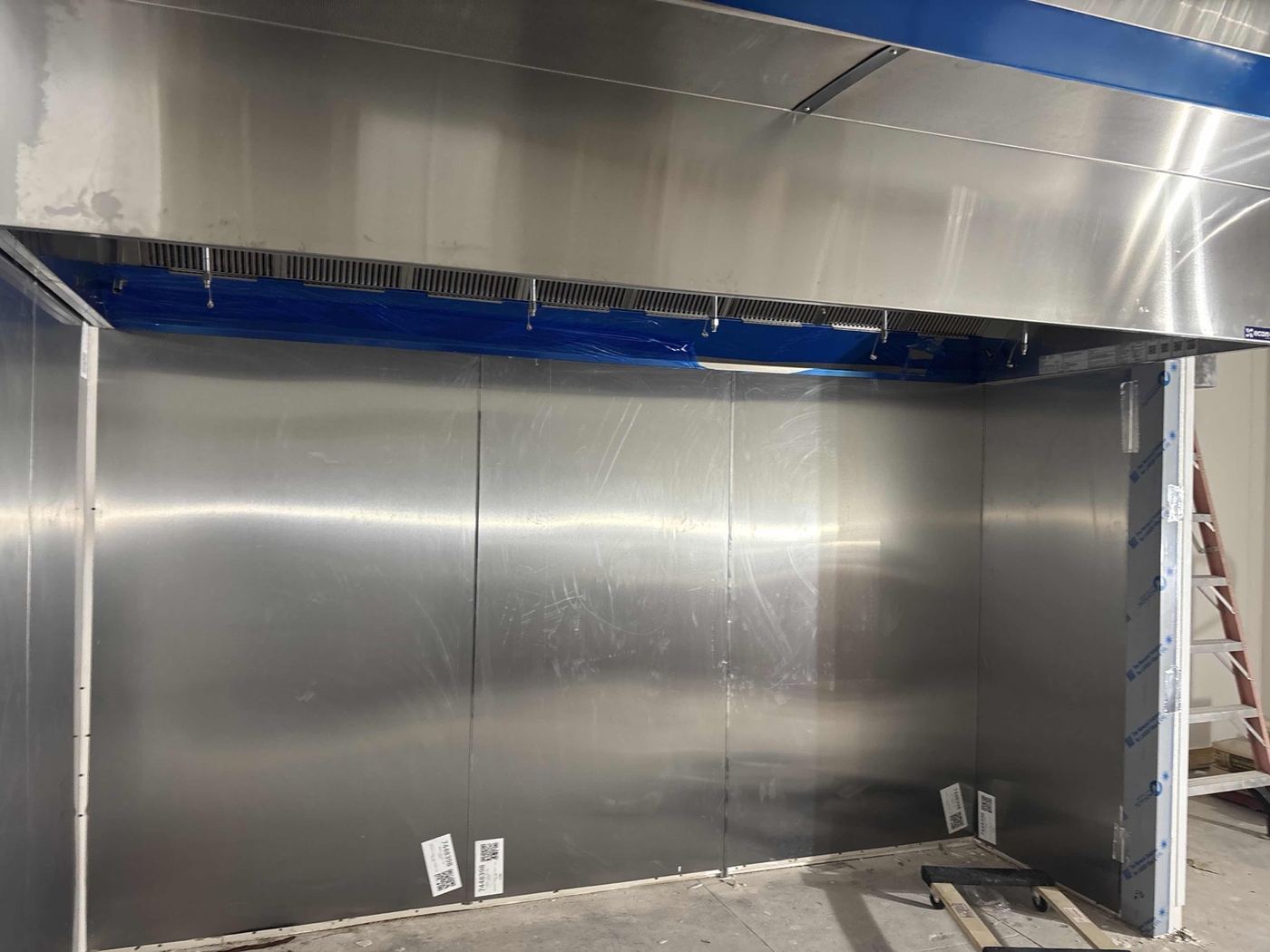
Under the Monroe County Pure Waters Sewer Use Law, waste carrying fats, oils or greases above 100 milligrams per liter is prohibited, subject to review by the Director. So is waste that solidifies between 32 and 150 degrees Fahrenheit. A commercial user may be required to install a trap or interceptor for fats, oils and grease.
Degreasers and enzymes that only suspend grease for a while must not go into a device built to catch it, and traps are kept up to the manufacturer's specification. The grease trap guide gives the wider picture.
5. Brighton shows how a town handles suppression permits
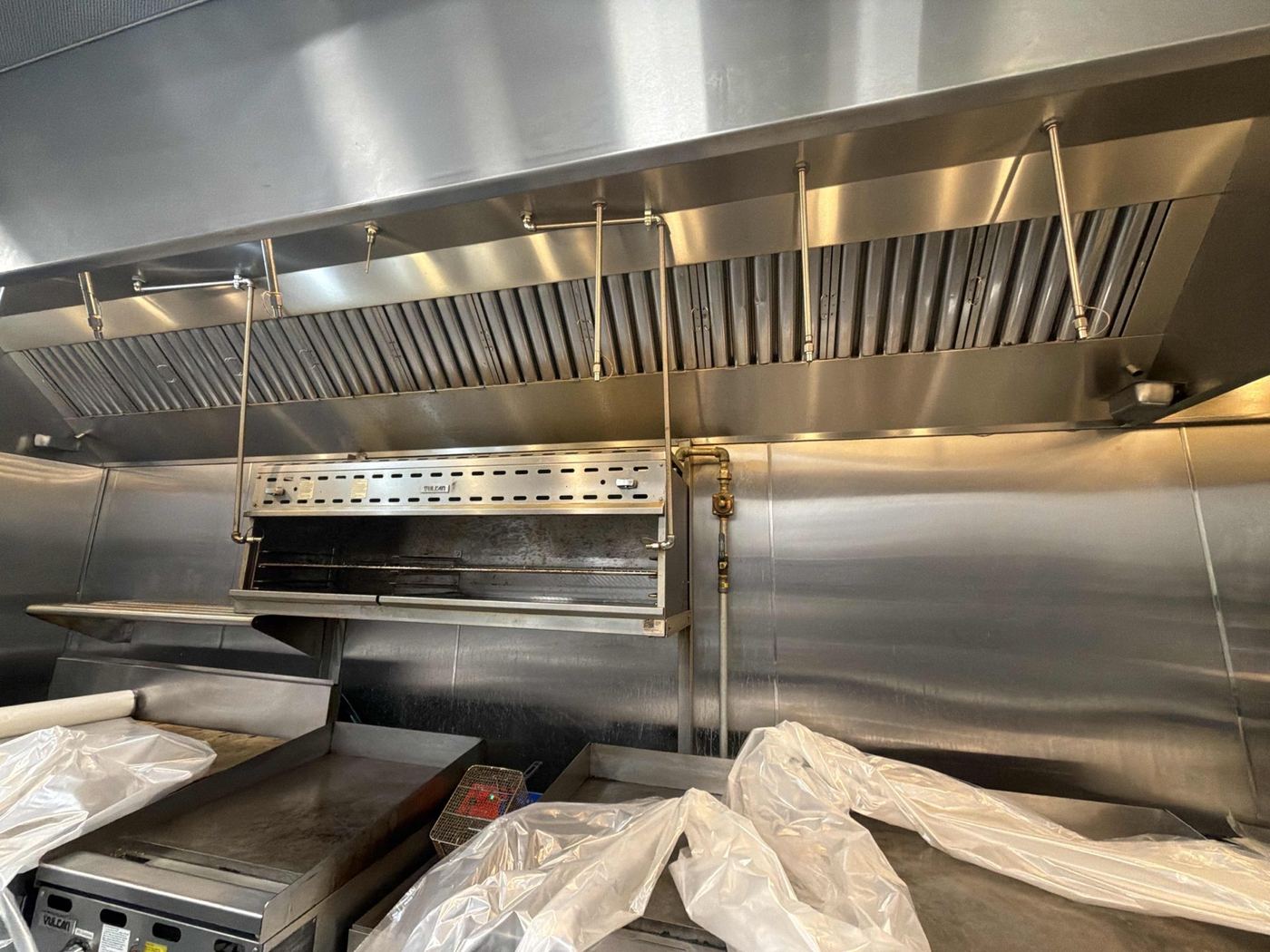
The Town of Brighton, a suburb of Rochester, runs its own fire marshal's office. Its website lists one permit application for kitchen fire suppression installation and a separate one for kitchen ventilation hood installation, plus a smoke test procedure for hoods.
Its UL 300 page explains how to check a system. Ask UL whether the model number is listed as UL 300 compliant, then confirm the parts were installed as the manual says. A wet agent and narrow nozzles over each cooking surface are good signs, while installation before November 21, 1994 or a missing UL label on the cylinder points the other way. The suppression guide covers the system types. Other towns and the City of Rochester set their own steps, so ask the office that covers your address.
6. First calls for a Monroe County kitchen
- Call Food Protection at (585) 753-5064 about plan approval and timing.
- Ask your town or city building department what it needs beyond the county's list.
- Ask the local fire marshal's office who approves hood and suppression work.
- Ask Pure Waters whether your site needs a grease trap or interceptor.
For hood, suppression or grease trap work in Monroe County, a request goes to the number of local companies you choose, from one to five.
Other places in New York
Questions
Who issues restaurant permits in Monroe County?
The county Department of Public Health's Food Protection office issues them, and it also reviews plans for new and expanded food service places.
What does the county charge for a plan review?
Its plan approval application lists a $75.00 plan review fee, paid with the completed form and the blueprints or floor plan drawing.
What is the limit on grease in Monroe County sewers?
The Pure Waters Sewer Use Law prohibits waste with fats, oils or greases above 100 milligrams per liter, subject to review by the Director.
Can I put enzymes in a grease trap in Monroe County?
The sewer law says degreasers, enzymes and similar substances that temporarily suspend grease must not be introduced into a device that is meant to capture it.