- Pick what you need and give your kitchen's ZIP code.
- Each service goes to the number of local companies you choose, from one to five. We check licenses where the law requires one and email you their names.
- You talk with them and decide. You hire and pay the company directly.
Facts checked 2026-11-29.
A convection oven in New York answers to two sets of rules, and the address picks the set. Outside New York City, the 2025 Uniform Code and the state health rules in 10 NYCRR Subpart 14-1 apply. Inside the five boroughs, the city's own codes and the FDNY take over. Both sets ask the same questions about the hood over the oven, how it sits on the floor and how the fire system covers it.
1. Which code applies at your address
The Department of State's legal memo LG03 says the Uniform Code covers every part of the state except New York City. The DOS notice of adoption lists the 2025 Uniform Code as in force from December 31, 2025. It includes the 2025 Mechanical, Fire and Fuel Gas Codes of New York State, all published in July 2025.
| Where the kitchen is | Code books for the hood and fire system | Health rules for the oven |
|---|---|---|
| Outside New York City | 2025 Mechanical Code and 2025 Fire Code of New York State, under the Uniform Code | 10 NYCRR Subpart 14-1, applied by the county or state health office |
| Inside the five boroughs | NYC 2022 Construction Codes, including the city Mechanical Code and Fuel Gas Code, plus the NYC Fire Code | City rules, which this page does not cover |
| Either place | The maker's install manual, which the codes point back to | The oven's sanitation listing, such as NSF/ANSI 4 |
ICC's own listing says the 2025 Fire Code of New York State is based on the 2024 International Fire Code. The base edition of the 2025 state Mechanical Code was not confirmed from an official page. So treat any model code section below as a pointer, then find the same rule in the state book.
One more line on the DOS page matters to a gas oven buyer. The 2025 rules that bar fossil-fuel equipment in new buildings, 19 NYCRR 1240.6 and Subpart 1229-2, are suspended by court order. The notice says they are not in force. Check that line again before you settle on gas for a new building.
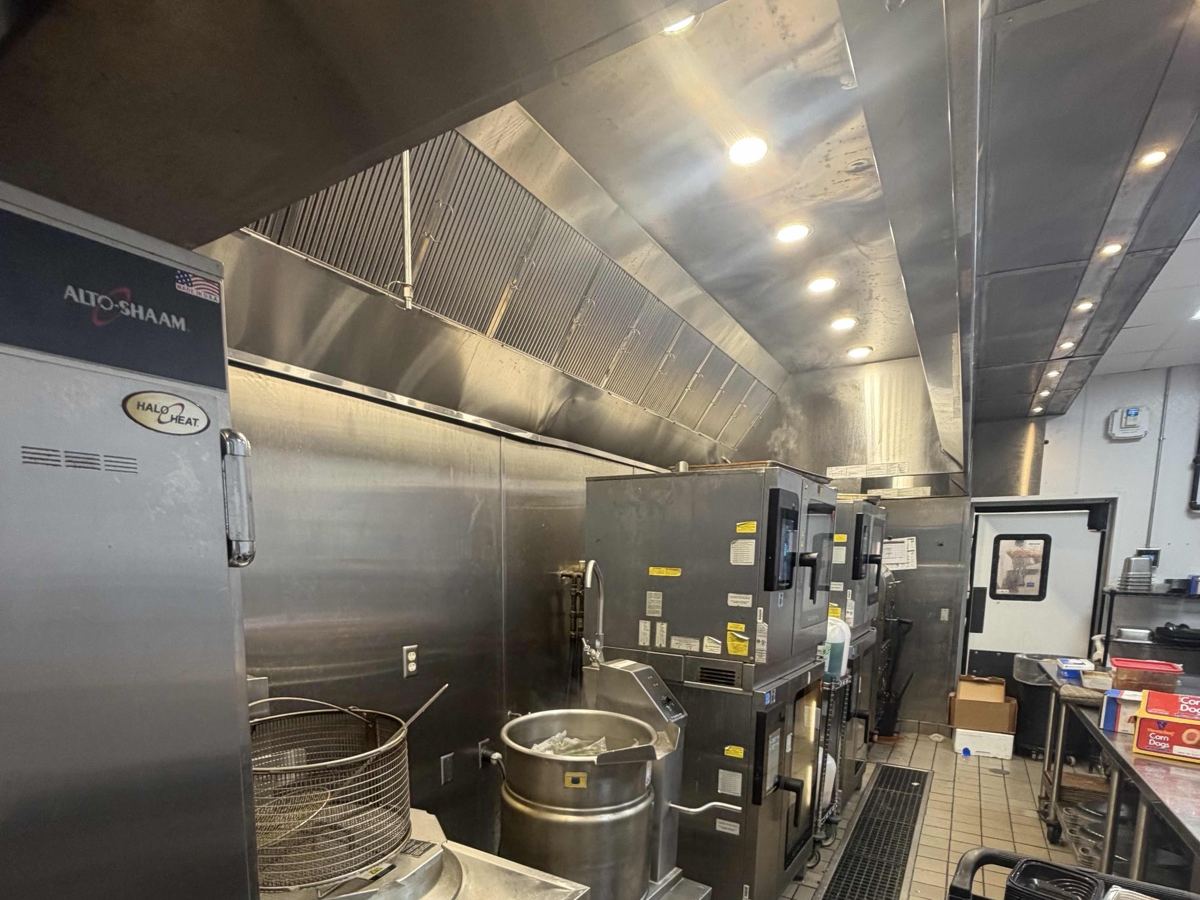
In the city, the FDNY permit page covers commercial cooking systems whose appliances give off grease vapors, steam, fumes, smoke or odors. Those systems must vent through an exhaust system, and the page names ovens among the appliances. It points to Fire Code Chapter 904 and Chapter 609. A licensed professional installs the hood and any required fire suppression equipment. The New York County page has the Manhattan details.
2. Type I, Type II or no hood
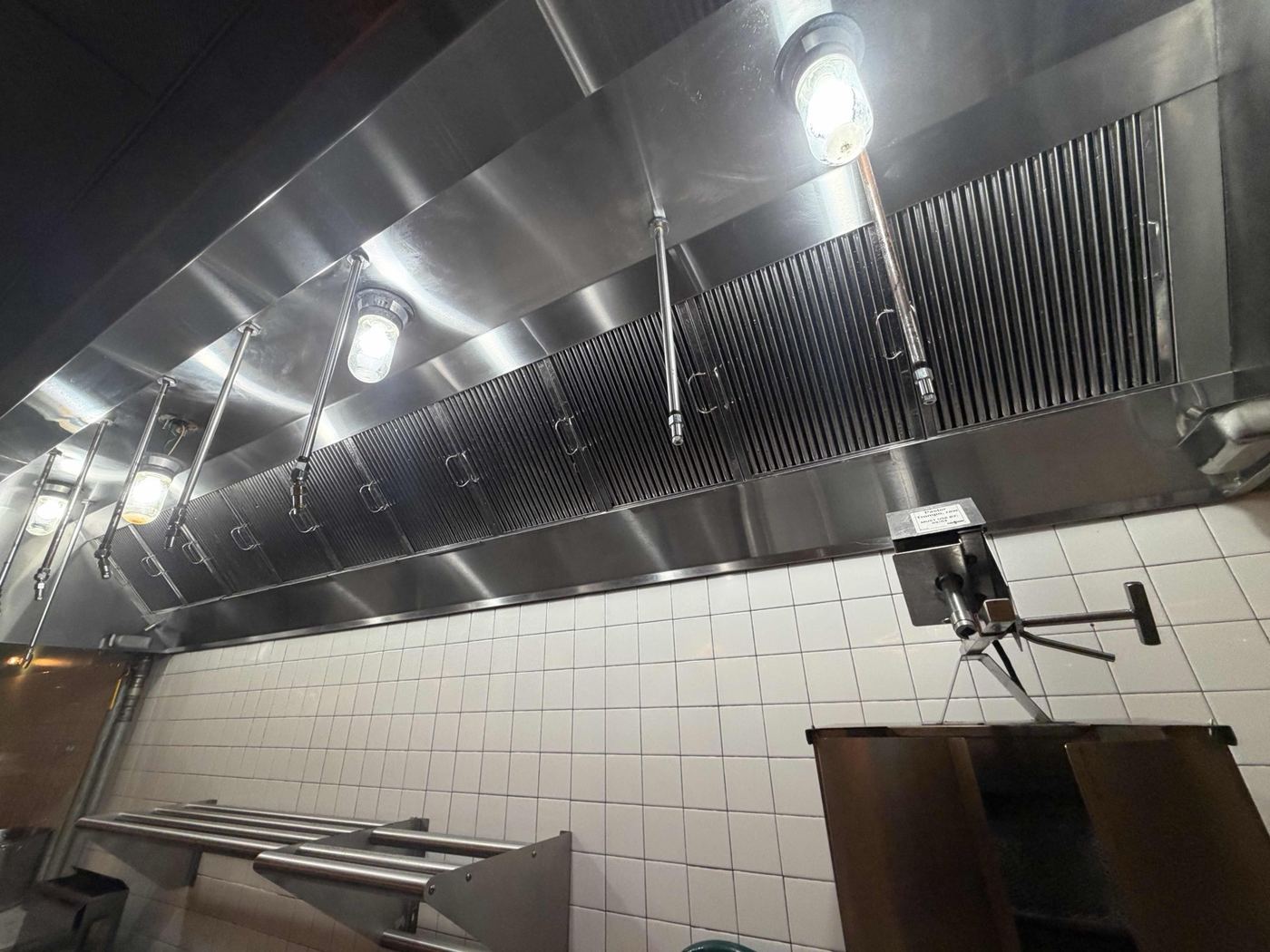
The 2021 International Mechanical Code, a model code, lists gas and electric convection ovens as light-duty cooking appliances. That label alone does not settle the hood. Section 507.2 sends any appliance that makes grease vapors or smoke to a Type I hood. A Type I hood carries grease filters and a fire suppression system.
A Type II hood handles heat, steam, odors and combustion products with no grease or smoke. Section 507.3 of the 2021 model code puts one over appliances that make heat or moisture, unless the building's HVAC design takes that load. Combustion products count too, which matters for a gas oven's flue.
| Oven and menu | Hood the sources point to | Where the rule sits |
|---|---|---|
| Gas or electric oven roasting chicken, bacon or other fatty food | Type I with grease filters and suppression | NY Mechanical Code 507.1 and 507.2.11, NY Fire Code 606.2 |
| Gas oven baking bread or pastry | Type II for combustion products, unless the official wants Type I | 2021 model IMC 507.3 |
| Electric oven baking, with no grease or smoke | Type II, or none if the HVAC takes the heat | 2021 model IMC 507.3 |
| Electric oven with a UL 710B ventless hood | No Type I hood, if the official accepts the listing | NY Fire Code 606.2 exceptions |
| Any oven under one canopy with a fryer | The whole hood is Type I | NY Mechanical Code 507.1 |
The makers lean toward a hood for gas. Southbend's gas sheet recommends a vented hood, and Blodgett and Vulcan point to NFPA 96.
Hood distances in print
| Source | What it sets | Number |
|---|---|---|
| 2021 model IMC 507.4.1 | Canopy overhang on every open side | At least 6 in, front lip no more than 4 ft above the cooking surface |
| 2021 model IMC Table 507.2.8 | Lowest edge of a grease filter over appliances with no open flame | At least 0.5 ft |
| Westchester plan notice | Hood reach past the equipment | At least 6 in past the sides |
| Blodgett DFG manual | Hood overhang and height | 6 in on open sides, hood edge no more than 7 ft off the floor |
The hoods and exhaust guide explains the state sections in more depth.
Get prices for this item. One request, and you pick how many sellers quote it.
Get quotes3. Ventless units for electric ovens
New York's Fire Code 606.2 has two exceptions to the Type I hood. One is for a recirculating system with a UL 710B listing. The other covers electric appliances shown to give off 5 mg/m3 of grease or less under UL 710B. Every ventless unit below is built for electric ovens only.
| Maker's unit | Grease result in the maker's paper | What it needs and what it fits |
|---|---|---|
| Blodgett VLF and VLH | 0.67 mg/m3 in the UL report for a stacked Zephaire-200-E | Power from the oven, no water or drain; fits CTB, Zephaire-E and Mark V ovens |
| Southbend PCE and PCHE ventless | 0.78 full-size and 1.17 half-size, per cavity | Catalyst above and below the fan; the sheet still says to check local codes |
| Cadco XAKHT ventless system | 0.24 mg/m3 under EPA 202 | Water from a 3/4 in bibb or hose, a drain, 4 in at the back and 2 in at the side |
Blodgett's paperwork carries three lines worth reading before you buy. Its UL report says no fire protection evaluation was done. The VLF manual says "DO NOT install onto gas ovens". The VLF sheet puts the heat left in the kitchen at 2,178 W for a standard-depth oven. That heat lands on the room's cooling load.
Cadco's warranty needs a direct, uninterrupted water supply to its hood.
The counties have their own view. Westchester's plan notice judges ventless hoods case by case. It can limit the permit to cooking non-fatty proteins. So ask the county about your menu before you order a ventless set.
4. Casters, gas connectors and restraints
Most full-size gas convection ovens can roll on casters, which helps with cleaning behind them. The gas line then has to bend and come apart safely. The makers agree on the basic kit: a commercial flexible connector, a quick disconnect and a restraint cable.
| Maker | Connector and quick disconnect | Restraint and moving rules |
|---|---|---|
| Blodgett DFG | At least 3/4 in inside diameter, to ANSI Z21.69 and Z21.41 | Cable rated for a 1,000 lb test load, lagged into studs, never to gas pipe or conduit; locking casters at the front |
| Vulcan VC4G and VC5G | Connector to Z21.69 / CSA 6.16, quick disconnect to Z21.41 / CSA 6.9 | Restraint at the rear; gas off before unhooking; relevel after each move |
| Vulcan CORE gas oven | Same two standards | Restraint must not rely on the connector; a double stack on casters needs one |
| Wolf WC4G | Hose kits of 3/4 in, 1 in and 1-1/4 in, each 4 ft | Restraint at the rear, reconnected before the gas comes back on |
| Southbend Platinum PCG | Hose of 3, 4 or 5 ft, inside diameter no smaller than 3/4 in | Restraint to a wall stud, reconnected after any move; brake casters on the front legs |
| Montague Vectaire | AGA listed connector, inside diameter equal to 3/4 in pipe | Never a domestic appliance connector |
5. Easily movable, sealed, or on 6 in legs
The state health rule in 10 NYCRR 14-1.101 sorts equipment into two groups. Equipment that is easily movable can roll out for cleaning. Everything else is sealed to the floor, set on a raised masonry platform, or raised on legs with at least 6 in of floor room.
To count as easily movable, the oven sits on wheels or casters. It also needs no utility connection, a quick disconnect, or a flexible line long enough to move it. Fixed equipment is sealed to its neighbor, the wall and the ceiling, unless there is room to clean around it.
| Set-up | How 14-1.101 reads it | What the maker says |
|---|---|---|
| Full-size gas oven on casters with a quick disconnect and restraint | Easily movable | Blodgett, Vulcan, Wolf and Southbend each sell the caster and hose kit |
| Single oven on its standard legs | Fixed, with leg room to clean under it | Vulcan and Wolf legs are 23-3/4 in; Southbend ships on 26 in legs |
| Double stack on short legs | Fixed, so check the 6 in floor room | Blodgett ships doubles on 6 in legs; Vulcan stacks on 8 in legs |
| Oven set on a curb | Sealed, so the joints must be tight | Montague needs its No. 555 toe base, on non-combustible floors only |
| Half-size electric on a curbed base | Sealed, with no legs | Lang lets the ECOH sit on a curbed base if 4 in stays open at the back |
| Gas oven sealed to a curb or wall | Sealed, which the state rule allows | Blodgett says NSF wants 6 in at the bottom and sides, so no curb base for the DFG |
Vulcan and Wolf add that a concrete base blocking air under the oven can void the warranty. On combustible floors, Vulcan, Wolf and Montague allow their ovens on 4 or 6 in legs.
6. County plan review and what to send
Section 14-1.191 lets the permit-issuing official ask for plans before you build, renovate or open. Those plans can show the floor layout, equipment, plumbing, ventilation and refuse storage. A reviewed plan does not excuse you from the rest of the Subpart.
| County | What it asks for | What it says about the oven's hood |
|---|---|---|
| Suffolk | A plan review application, permit application, sewage disposal questionnaire, water heater sheet, menu, equipment spec sheets and one set of plans at 1/4 inch scale | Equipment that gives off grease or condensate goes under a hood with grease filters |
| Westchester | Approved plans before work starts, at least two sets drawn to scale; it keeps one stamped set | Hoods meet NSF Standard 2 and NFPA 96, and reach 6 in past the sides; ventless judged case by case |
| Other counties | Plans if the permit-issuing official asks, under 14-1.191 | The state Mechanical and Fire Codes |
Suffolk's Food Protection Program says it finishes plan reviews within 5 business days. It also wants cooking equipment that is commercial grade and NSF approved or equivalent. The Suffolk County page and the Westchester County page have the office details.
| Item for the packet | Why the reviewer wants it | Where to find it |
|---|---|---|
| Maker's spec sheet | Model, fuel, size, pans and clearances | The maker's site, by model number |
| Hood plan or ventless listing | Shows the hood type and any UL 710B report | The hood designer, or the ventless unit's approval packet |
| Leg, caster or curb choice | Shows how the oven meets 14-1.101 | The spec sheet's options list |
| Sanitation listing | NSF/ANSI 4 or an equal mark | The rating plate and the spec sheet |
| Menu | Tells the reviewer whether grease or smoke comes off the oven | Your own planning notes |
The equipment and food supply guide lists the rest of Suffolk's packet. The opening a restaurant guide puts plan review in order with the other steps.
7. Fire suppression, and the gas oven that stays cold
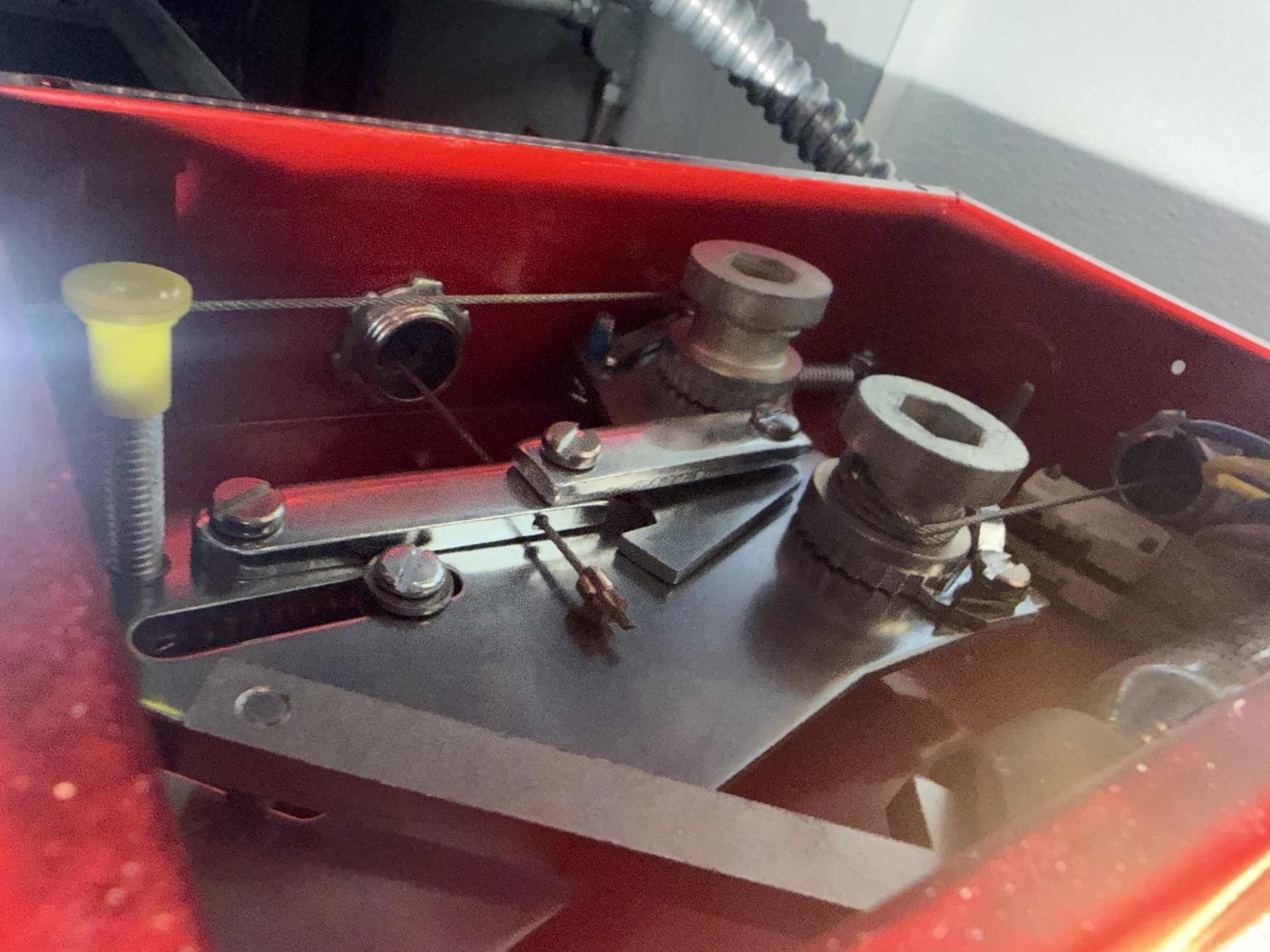
An oven under a Type I hood is covered by that hood's suppression system. New York's Fire Code 904.14 sets the rules. Pre-engineered systems are tested to UL 300, and wet chemical systems follow NFPA 17A.
| NY Fire Code section | What it asks | What it means for a convection oven |
|---|---|---|
| 904.14.1 | A manual pull 10 to 20 ft from the exhaust system, 42 to 48 in high, near an exit | The pull stays where it is when the oven moves in |
| 904.14.5.1 | A change of equipment, its position or the cooking media brings the system back under review | A new oven, or one rolled to a new spot, means a coverage check |
| 904.14.5.2 | Service at least every six months and after any discharge | The next visit confirms the oven is still covered |
| 904.14.5.3 | Fusible links replaced every year, frangible bulbs excepted | Links over the oven are part of that yearly change |
The 2015 model fire code, at 904.12.2, describes what a discharge does. The system cuts fuel or power to the cooking equipment under the hood. It stays off until someone resets it by hand.
In the city, the FDNY wants a first inspection and test after plan approval and installation. Then the system is inspected every year before the permit runs out. In Suffolk, technicians who install or service these systems hold a license from the county's Fire Extinguisher Licensing Board.
Owners of new kitchens often hit a snag at the suppression final. The gas service is often turned on only after the final inspections. A new gas convection oven then has no fuel on test day. It also can't go through its first start-up, since that step needs gas. A cold oven at that test is expected, and it is not a failed inspection.
Vulcan, Wolf and Southbend each want a qualified person to run that first start-up. Southbend ties its warranty to it.
The inspector still has to see the oven lose power when the system trips. Most gas convection ovens plug into 120 V for the fan, controls and lights. Vulcan's VC4G uses a 6 ft cord at 120 V, for one. Leave that cord plugged in and its breaker on for the test. When the system trips, the panel light, display or fan goes dark, and the inspector can see it.
Tell the suppression company and the inspector about the gas oven before the test is booked. Then nobody arrives expecting a hot oven. The fire suppression guide covers the rest of the state's rules.
8. Sizes, fuel and ENERGY STAR in short
Convection ovens come in two pan sizes. Full-size ovens take 18 x 26 in sheet pans, and half-size ovens take 18 x 13 in pans. Bakery-depth models, like Blodgett's Zephaire-200-G or Lang's 46 in Strato, load full pans either way.
| Group | ENERGY STAR 3.0 limits | A model of that size, from its spec sheet |
|---|---|---|
| Full-size gas | Idle at or below 9,500 Btu/h, efficiency at or above 49% | Southbend PCG at 50,000, 70,000 or 90,000 Btu/h |
| Half-size gas | Not eligible | None in this group |
| Half-size electric | Idle at or below 1.00 kW, efficiency at or above 71% | Blodgett CTB at 5.6 kW, with an 8.0 kW option |
| Full-size electric, 5 pans or more | Idle at or below 1.40 kW, efficiency at or above 76% | Turbofan E32D5 for five full sheet pans |
| Full-size electric, under 5 pans | Idle at or below 1.00 kW, with no efficiency figure | Cadco Bakerlux XAFT-04FS-LD for four full sheet pans |
Every ENERGY STAR oven must also hold NSF/ANSI 4 sanitation listing. The program's key criteria page says half-size convection ovens are not eligible, with no fuel named. The 3.0 spec rules out half-size gas only, so quote the spec.
Fuel sets the power you need. A gas oven still needs a 120 V outlet for its fan and controls. A full-size electric oven needs a large circuit, such as 52.9 A per Southbend PCE oven at 208 V single phase. Have an electrician compare the spec sheet to the panel before you order.
9. Con Edison and National Grid programs
Utility programs change each year, so check the program page before you count on one. This page gives no amounts.
| Program page | What it showed on November 29, 2026 | Next step |
|---|---|---|
| Con Edison commercial and industrial rebates | Lists several building programs, with no kitchen program and no ovens | Ask Con Edison whether a listed program covers your oven |
| National Grid commercial kitchen equipment | Covers Massachusetts, Upstate New York, New York City and Long Island; convection ovens not named on their own | Read the current list for your area |
| National Grid gas-fired kitchen equipment, upstate address | High-efficiency gas convection ovens listed with fryers and steamers; no region or year named | Confirm your area and the program year |
| ENERGY STAR Rebate Finder | Searches utility offers by ZIP code | Enter the kitchen's ZIP code |
For the steam side of the same buying choice, see the combi oven page. Send one request from this page, and it reaches up to five New York sellers you pick for a convection oven.
Other kitchen equipment
Questions
Which code covers the hood over a convection oven in New York City?
The NYC 2022 Construction Codes and the NYC Fire Code apply there. The FDNY permit page names Fire Code Chapters 904 and 609 for commercial cooking systems.
Can an electric convection oven run without a hood in New York?
It can when the code official accepts a UL 710B listing. Fire Code 606.2 exempts recirculating systems and low-grease electric appliances under that standard. Westchester judges ventless hoods case by case.
Does a convection oven on casters count as easily movable?
Under 10 NYCRR 14-1.101, yes, if it has no utility line, a quick disconnect, or a flexible line long enough to move it.
Why won't a new gas convection oven heat at the suppression final?
Gas often comes on only after the finals, so the oven has no fuel yet. Keep its 120 V cord powered, so its light or fan shows the shutoff.
Do Con Edison or National Grid offer a convection oven program?
Con Edison's business page showed no oven program on November 29, 2026. National Grid's upstate gas page lists high-efficiency gas convection ovens. Check each page for the current year.
Sources
- DOS legal memo LG03, the Uniform Code and New York City, read November 15, 2026
- DOS notice of adoption, 2025 Uniform Code, read November 29, 2026
- 2025 Fire Code of New York State (DOS PDF), read November 15, 2026
- 2025 Mechanical Code of New York State (DOS PDF), read November 15, 2026
- ICC listing, 2025 Fire Code of New York State, read November 29, 2026
- 10 NYCRR 14-1.101, equipment installation, read November 29, 2026
- 10 NYCRR 14-1.191, plans, read November 29, 2026
- FDNY commercial cooking system permit, read November 29, 2026
- NYC Fire Code, chapter 6, read November 15, 2026
- FDNY Restaurant Fire Safety Guide, read November 15, 2026
- NYC 2022 Construction Codes, read November 29, 2026
- Suffolk County Food Protection, read November 15, 2026
- Suffolk County plan review guide, read November 15, 2026
- Suffolk County Fire Extinguisher Licensing Board, read November 15, 2026
- Westchester County plan notice for food service plans, read November 15, 2026
- International Mechanical Code 2021, definitions, read November 24, 2026
- International Mechanical Code 2021, chapter 5, read November 24, 2026
- International Fire Code 2015, chapter 9, read November 24, 2026
- Blodgett DFG-100 and DFG-200 manual, read November 29, 2026
- Blodgett DFG-100-ES and DFG-200-ES manual, read November 29, 2026
- Blodgett DFG-100 spec sheet, read November 29, 2026
- Blodgett CTB half-size spec sheet, read November 29, 2026
- Blodgett Zephaire-200-G spec sheet, read November 29, 2026
- Blodgett ventless convection brochure, read November 29, 2026
- Blodgett VLF ventless approvals packet, read November 29, 2026
- Blodgett VLF ventless hood manual, read November 29, 2026
- Vulcan VC4G spec sheet, read November 29, 2026
- Vulcan VC5G spec sheet, read November 29, 2026
- Vulcan gas convection oven manual, read November 29, 2026
- Vulcan CORE gas convection oven manual, read November 29, 2026
- Wolf WC4GD spec sheet, read November 29, 2026
- Wolf WC4G manual, read November 29, 2026
- Southbend Platinum PCG single gas spec sheet, read November 29, 2026
- Southbend Platinum PCE double electric spec sheet, read November 29, 2026
- Southbend Platinum gas convection manual, read November 29, 2026
- Southbend ventless convection brochure, read November 29, 2026
- Lang GCOD Strato spec sheet, read November 29, 2026
- Lang ECOH owner's manual, read November 29, 2026
- Moffat Turbofan E32D5 spec sheet, read November 29, 2026
- Cadco Bakerlux XAFT-04FS-LD spec sheet, read November 29, 2026
- Cadco ventless system for Bakerlux ovens, read November 29, 2026
- Montague Vectaire gas convection manual, read November 29, 2026
- ENERGY STAR Version 3.0 commercial ovens specification, read November 29, 2026
- ENERGY STAR commercial ovens, key product criteria, read November 29, 2026
- ENERGY STAR Rebate Finder, read November 29, 2026
- Con Edison commercial and industrial rebates, read November 29, 2026
- National Grid commercial kitchen equipment, read November 29, 2026
- National Grid gas-fired commercial kitchen equipment, read November 29, 2026