- Pick what you need and give your kitchen's ZIP code.
- Each service goes to the number of local companies you choose, from one to five. We check licenses where the law requires one and email you their names.
- You talk with them and decide. You hire and pay the company directly.
Facts checked 2026-11-15.
In New York, a restaurant hood is covered by two of the 2025 state code books at once: the Mechanical Code sets how it is built, and the Fire Code sets when it is required and how it is protected. Your local code office reviews the plans and inspects the work.
1. When a hood is required
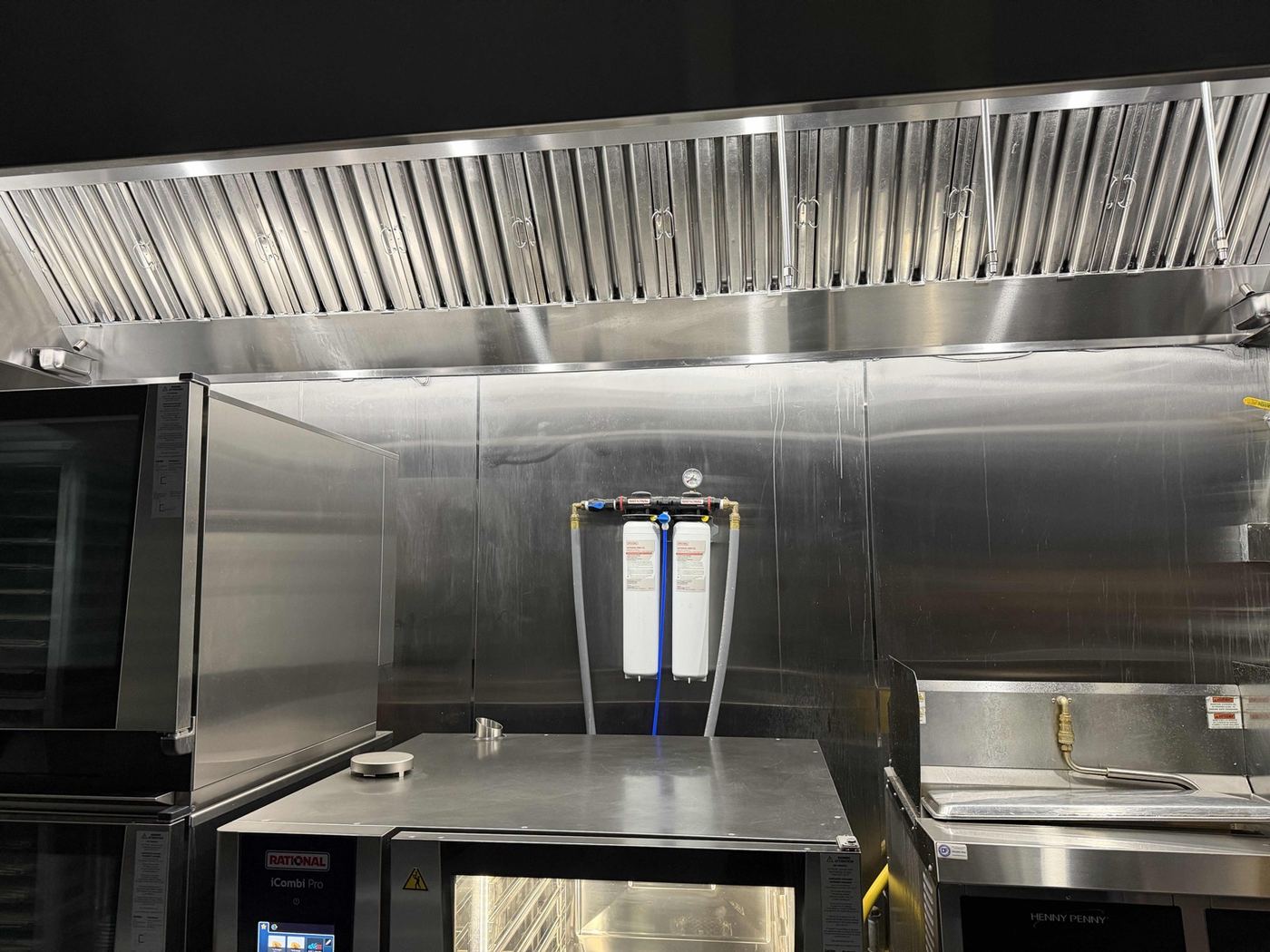
Fire Code section 606.2 says a Type I hood goes at or above all commercial cooking appliances that produce grease vapors. That includes domestic appliances used commercially. The code lists some exceptions:
- listed down-draft appliances, under NFPA 96
- listed factory-built hoods, under UL 710
- recirculating systems, under UL 710B
- electric appliances proven at 5 mg/m3 or less of grease under UL 710B
Section 606.1 sends the hood itself to the Mechanical Code of New York State.
2. What the Mechanical Code asks for
Section 507.1 says commercial kitchen exhaust hoods are Type I or Type II and must capture and confine cooking vapors and residues. Where any appliance under a single hood needs a Type I hood, a Type I hood goes over the whole line.
Other points a plan reviewer looks for:
- Filters: Type I hoods carry grease filters listed to UL 1046 (section 507.2.8).
- Suppression: a Type I hood has an approved automatic fire suppression system (section 507.2.11).
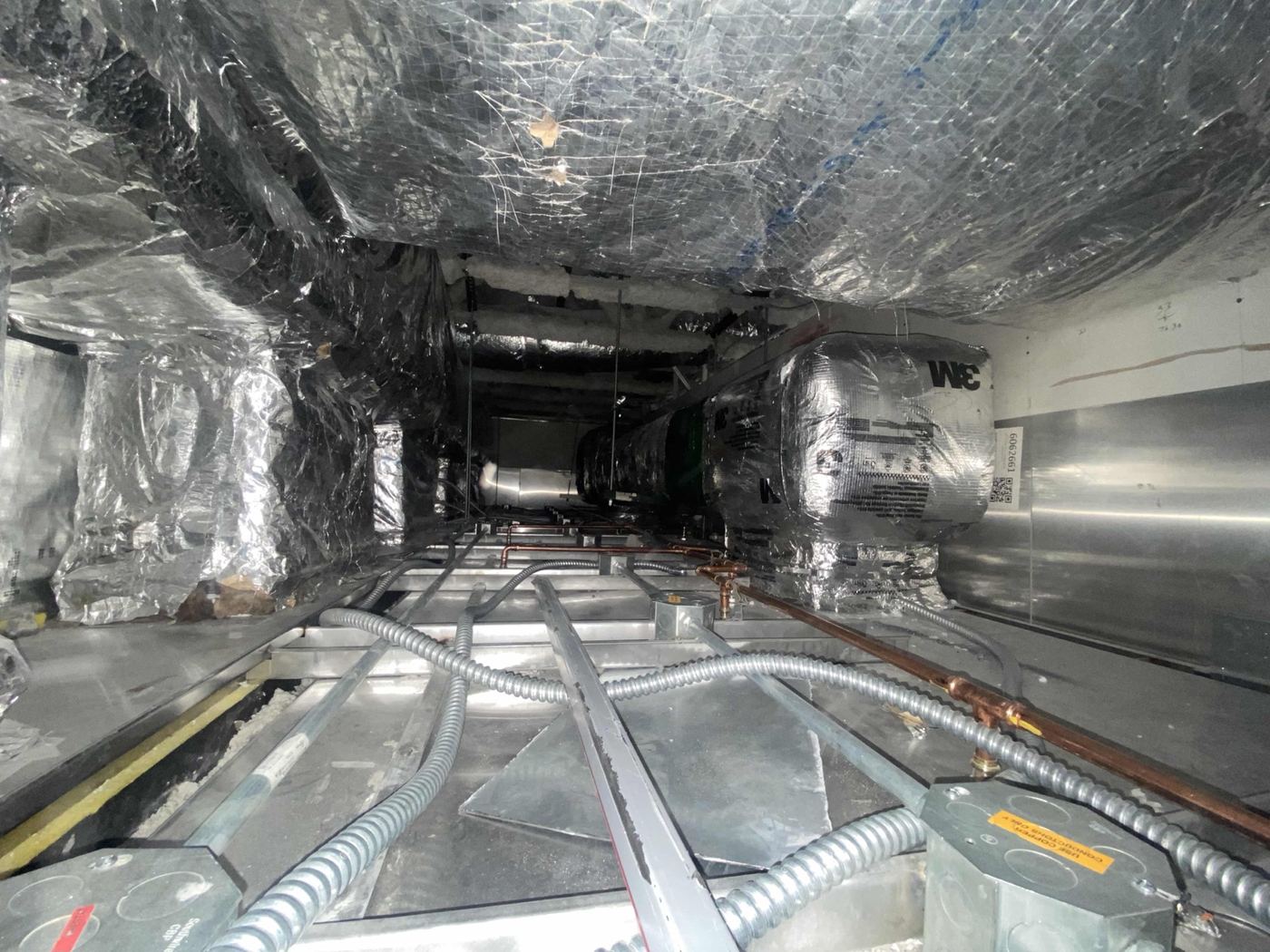
- Ducts: grease duct systems are designed, built and installed under sections 506.3.1 through 506.3.13.3, and 506.3.1 sets the minimum steel thickness.
- Testing: a performance test is done when the work is complete and before final approval, and section 507.1.7.1 adds a capture and containment test. The permit holder supplies the test equipment.
The fire suppression guide covers the extinguishing system, and the hood cleaning guide covers upkeep after the hood is running.
A local company can take it from here. One form, free for restaurants.
Get a quote3. What the health rules add
The state food service rule, 10 NYCRR 14-1.175, says hoods and devices must be built and installed to stop grease or condensation from collecting on walls or ceilings and from dripping onto food or food-contact surfaces. New or extensively remodeled kitchens use mechanical ventilation where odors, vapors or fumes arise.
Westchester County gives a sample of how a county health office words it. Its plan notice says cooking equipment that makes steam, grease, fumes or heat goes under an exhaust hood, the hood meets NSF Standard 2 and NFPA 96, and the local municipality approves the ventilation. Other counties have their own plan guides, so ask yours.
4. Who reviews and inspects
Local building and code offices review plans and inspect the work. Buffalo's Department of Permit and Inspection Services is one example: it says it reviews and inspects for compliance with the New York State Building and Fire Code. We did not confirm a statewide license for hood and duct installers, and local licensing varies, so ask the code office what it requires of the person doing the work.
The 2025 Uniform Code has applied to building permit applications since December 31, 2025. The Fire Code lists NFPA 96 as its 2024 edition.
5. Before you buy a hood
- Does the plan show a Type I hood over every grease-producing appliance?
- Are UL 1046 filters specified?
- Which fire suppression system will protect the hood and duct?
- Who supplies the test equipment for the final performance test?
- Which office reviews ventilation in your town, the code office or the health office?
Tell us about the new hood or exhaust job in the form, and we'll pass it to local companies near your New York kitchen.
Questions
Does a New York restaurant hood need a fire suppression system?
Yes. The Mechanical Code requires a Type I hood to have an approved automatic fire suppression system, and the Fire Code sets how that system is installed and serviced.
What kind of filter does a Type I hood use?
Grease filters listed to UL 1046. The Mechanical Code names that standard in section 507.2.8 for every Type I hood.
Is a performance test required for a new hood?
Yes. Section 507.1.7 calls for a performance test on completion and before final approval, with a capture and containment test added.
Can a home-style range sit under a commercial hood?
The Fire Code covers domestic appliances used commercially and requires a Type I hood over them when they produce grease vapors, subject to its listed exceptions.
Sources
- 2025 Fire Code of New York State (DOS PDF)
- 2025 Mechanical Code of New York State (DOS PDF)
- DOS notice of adoption, 2025 Uniform Code
- 10 NYCRR 14-1.175, ventilation
- Westchester County plan notice for food service plans
- Buffalo Permit and Inspection Services
- Buffalo license applications and code requirements